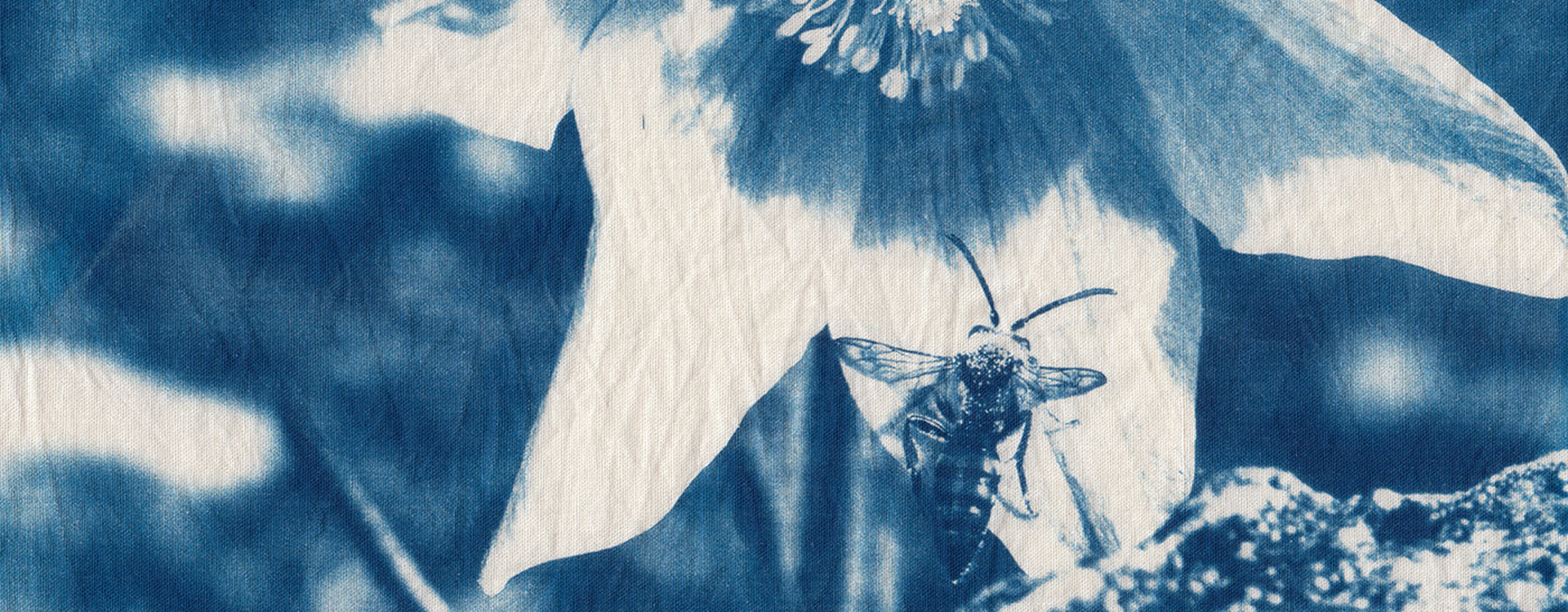
Places to Land invites visitors to slow down outside Halifax Central Library. The work centres on a group of custom bean bag chairs made in advance for this site. The chairs will be accompanied by bolsters, straps and textile banners. The work will incorporate textile panels produced through alternative cyanotype processes and treated for outdoor durability. These surfaces will hold visual traces of sunlight and water as well as images or words connected to the surrounding area. As the arrangement of these elements changes, the installation will function as both a sculptural composition and a usable place to pause.
Places to Land is a Beacon Project presented as part of Nocturne 2026. This durational performance and temporary textile installation will take place on Saturday, October 17, 2026, from 6:00 p.m. to midnight during Nocturne’s signature nighttime art experience. Located in the public space in front of Halifax Central Library, the project centres on a group of custom bean bag chairs made in advance for this site and performance. The chairs will be accompanied by quilted pads, bolsters, straps and textile banners. Throughout the evening, I will carry, gather, separate and reposition these soft objects to create an environment that shifts in response to pedestrian movement, weather and the ways visitors use the space. The work will incorporate textile panels produced through alternative cyanotype processes and treated for outdoor durability. These surfaces will hold visual traces of sunlight and water as well as images or words connected to the surrounding area. As their arrangement changes, the installation will function as both a sculptural composition and a usable place to pause. The performance will unfold through actions including lifting, dragging, turning, stacking, folding, tying and resting. These repeated movements will make the physical labour involved in offering support visible. Between these actions, the bean bag chairs and other textile elements will remain available as a temporary resting place. Visitors will be welcome to sit on designated pieces. Brief prompts such as “rest here” and “where can your body pause in public?” will offer gentle ways to engage with the work without placing demands on visitors. Visitors may also leave written reflections on weatherproof cards about comfort, permission and belonging in shared space. Within this busy civic setting, Places to Land considers what it means to make rest publicly visible. The project responds to the difficulty of finding somewhere to stop without needing to purchase anything, justify one’s presence or quickly move along. Rather than altering existing architecture, I am introducing handmade forms that create temporary conditions of support, closeness and ease. Through cyanotype, textile construction, repeated movement and public use, the work turns the area in front of the library into a temporary landscape shaped by rest.