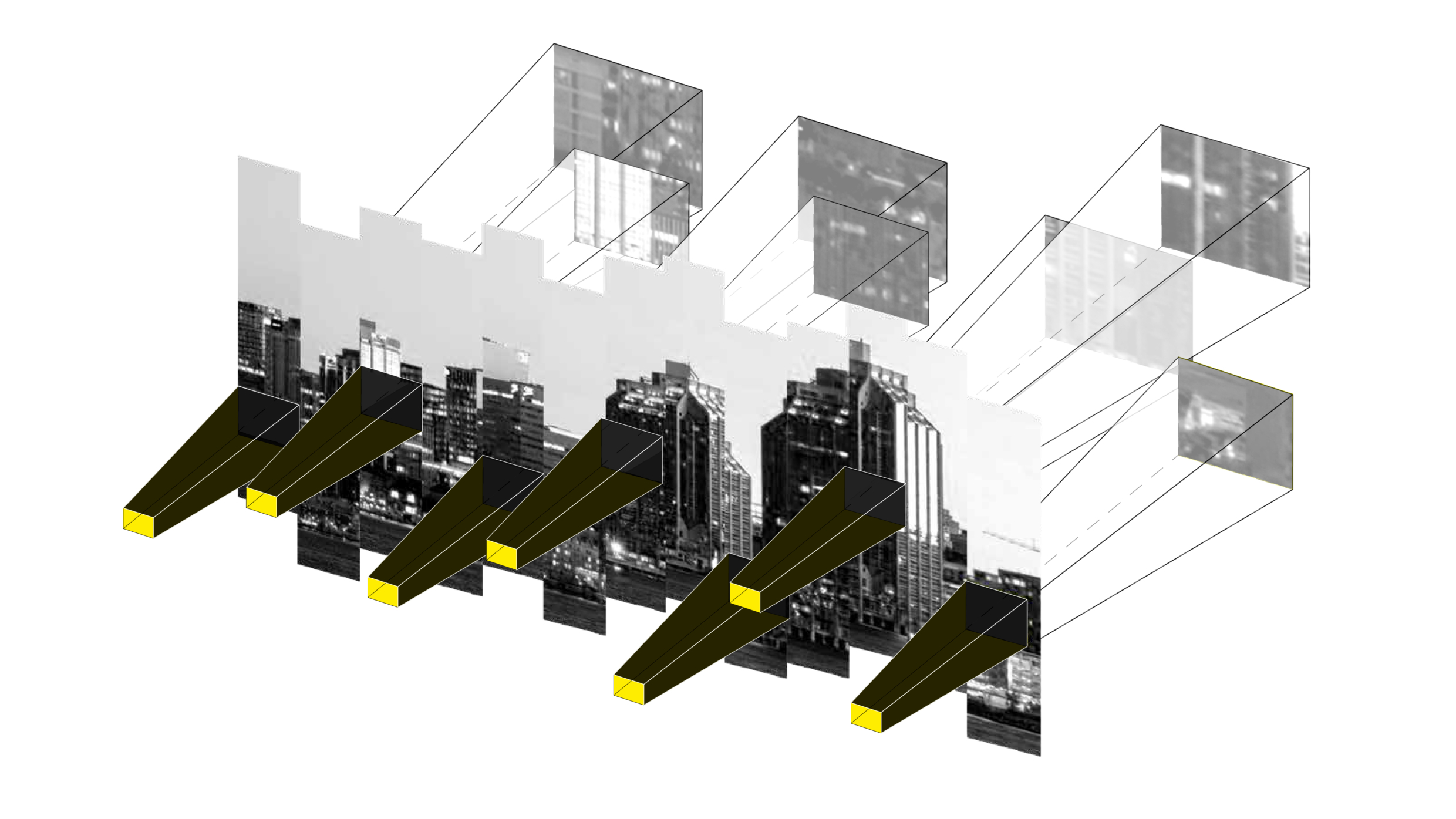
(Un)Seen City: Systems Between invites visitors to experience a familiar pedestrian corridor in an unfamiliar way. Through a series of temporary architectural interventions, the installation encourages curiosity about the systems that shape everyday public space and asks how we come to know, remember, and relate to the places we pass through. The project is accompanied by the satellite installation (Un)Seen City: Spaces Between at Architecture49, where the investigation expands from the systems that shape a single place to the spaces that connect the wider city.
(Un)Seen City: Systems Between is a temporary architectural installation that transforms an everyday pedestrian corridor into a place of investigation. Rather than accepting the space as simply a route between destinations, visitors are invited to pause and investigate the systems that shape it. What systems are present? Why do they exist? Who do they serve? How do they influence the way we move, gather, and experience this place? Through a series of temporary architectural interventions, familiar elements of the corridor are reframed to draw attention to the systems that quietly shape everyday life. By interrupting habitual movement patterns, the installation encourages visitors to slow down, look more closely, and question why these systems so often go (un)seen. If they influence the way we experience the city, why do we so rarely notice them? And if we begin to understand them, does that change the way we experience the places they create? Developed in collaboration with Architecture49, the project extends beyond the Dalhousie site through the companion installation (Un)Seen City: Spaces Between, inviting visitors to continue this investigation from a new perspective. Our interpretation of Embodied City begins with the understanding that cities are experienced through the body. By slowing movement and creating moments of shared attention, the installation transforms individual observation into a collective act of inquiry. For one evening, the corridor becomes more than a passage. It becomes a place to (un)see the city, revealing that the places we move through every day are not simply there, but are shaped by systems, decisions, and relationships that continue to influence how we inhabit them.
Wayfinding note:
The installation is located outdoors along the pedestrian pathway on the east side of the Dalhousie School of Architecture, between Spring Garden Road and DaCosta Row. Visitors can enter the installation from either Spring Garden Road or DaCosta Row and follow the pathway through the work. The site is adjacent to the School of Architecture and extends toward the Provincial Courthouse.